
The public is captivated by the Artemis II mission! Below is a curated collection of NASA Artemis II resources, featuring multimedia content, interactive activities, and expert presentations tailored specifically for educators and interpreters. By connecting upcoming lunar missions with historical Apollo achievements and Earth-based landscapes, the site equips communicators with the necessary tools to effectively share the excitement of space exploration with the public.
Jump to:
Artemis II Resources - Earth to Sky Interpreter Resources - Activities with Your Audience - Apollo Missions Resources
Other Resources - Essential Questions & Intangibles
Check out (and add) your responses to these prompts!
- When you think about the public engagement with Artemis II, what moments, feelings, or images stand out most to you?
- What aspects of the Artemis program excite you the most? Why?
Artemis II Resources
Mission Information
-
Under Artemis, NASA will send astronauts on increasingly difficult missions to explore more of the Moon for scientific discovery, economic benefits, and to build on our foundation for the first crewed missions to Mars.
Lunar Living: NASA’s Artemis Base Camp Concept
- NASA’s Artemis program has sparked excitement around the world and catalyzed new interest in exploring the Moon as the agency prepares to land the first woman and next man on the lunar South Pole in 2024. After that, NASA and its growing list of global partners will establish sustainable exploration by the end of the decade.
- Stay up-to-date with the latest Artemis II content from NASA as we explore the Moon for scientific discovery and to prepare for human missions to Mars.
- This interactive guide is intended to serve as a resource tool for members of the community to learn how they can engage with the launch of Artemis II.
Photos, Audio, & Videos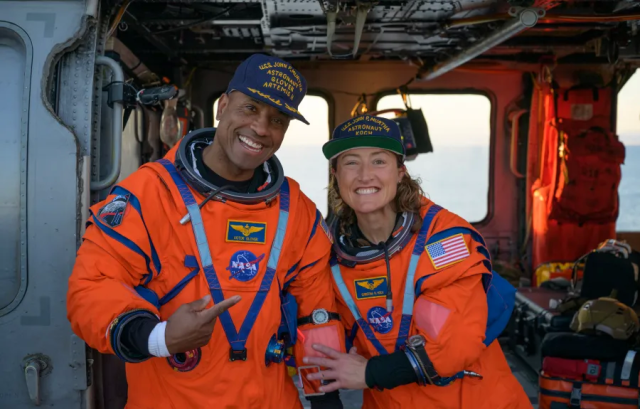
- View and download mission photographs, behind‑the‑scenes videos, podcasts, and more.
Moonbound: For All Humanity Series (and more) videos
- With Artemis II on the horizon, four astronauts transition from years of training to mission-ready reality. The latest episode explores the physical and mental challenges of preparing for a crewed flight around the Moon, and the teamwork required to test new systems at the edge of exploration.
- This page hosts a growing collection of authentic sounds recorded during NASA’s Artemis campaign as humanity returns to the Moon. All audio files are free to download and cleared for use in accordance with NASA’s media usage guidelines. This library will be updated regularly as new mission audio becomes available.
- Copy, Moon Joy can be found on YouTube.
NASA's Curious Universe Podcast
- Curious Universe brings you mind-blowing science and space adventures you won’t find anywhere else. Explore the cosmos alongside astronauts, scientists, engineers, and other top NASA experts.
- Experience Earth, our solar system, nearby asteroids, the universe, and the spacecraft exploring them with immersive real-time 3D web-based apps. Start exploring your solar system now
- Hank Green, notable space enthusiast and co-founder of Crash Course and SciShow, created a website that organizes NASA-issued photos from the Artemis II mission.
Artemis II Astronaut Quotes
Christina Koch- SitRep (Situational Report) on the Moon
Victor Glover - Poetically Describing the Texture of the Lunar Surface
Jeremy Hansen - Describing the View During a Solar Eclipse: Not Enough Adjectives
Reid Wiseman - Describing the Orientale Basin Using a Grand Canyon Analogy
Earth to Sky Presentation & Recordings 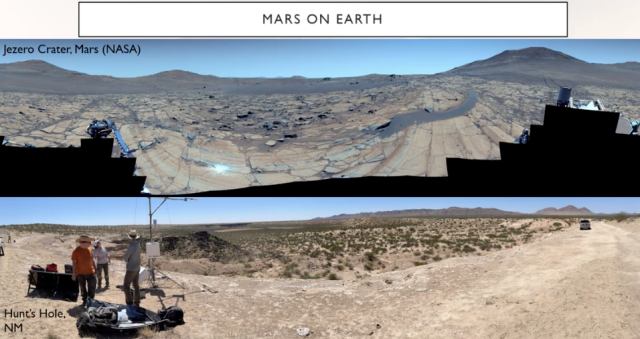
For any Earth to Sky recordings, you must be logged into your account to view.
Bring NASA Space Science to Your Seasonal Training
- This collection of curated presentations and video clips is a powerful resource for interpretation and education supervisors seeking to integrate space science into their training programs for field-level and early career staff.
Fly Me to The Moon: Astrobiology & the Moon
- What happens when humans bring microbes to the Moon's surface? Prabal Saxena explains that humans are inherently "messy" because we carry trillions of bacteria and millions of microbes per square centimeter on our skin. He connects this research to "Leave No Trace" principles, emphasizing that sustainable lunar exploration requires understanding and tracking how human presence affects pristine environments. This presentation is designed to be accessible to interpreters without microbiology or space science backgrounds.
Bring International Observe the Moon Night to Your Audience
-
Caela Barry, Science Outreach Coordinator with NASA Goddard's Solar System Exploration Division, shares how to get involved with the International Observe the Moon Night event and resources to explore with your audience! This webinar is tailored to the Earth to Sky community of place-based educators and interpreters.
- Ari Koeppel's presentation celebrates five years of NASA's Perseverance rover on Mars by weaving together three interconnected themes: using Mars as a gateway for building scientific thinking, sharing the latest discoveries from Perseverance, and connecting Martian geology with similar places on Earth. By connecting familiar Earth landscapes to Martian geology, he demonstrates how planetary science enhances our understanding of universal geological processes.
Landscapes on Other Worlds - Mountains, Volcanoes, & Sand Dunes
- Caela Barry's presentation is valuable for any interpreter or educator that works in an outdoor setting. Caela takes viewers on a tour of the solar system, highlighting similarities between landscapes found in public lands around the US and those found on other planets. Caela also provides a foundation of lunar landscape knowledge, helpful for interpreters facilitating Moon programming.
100 Things to See in the Night Sky
- Astronomer and author Dean Regas takes us on an inspiring journey through the night sky, sharing his passion for making astronomy accessible to everyone—regardless of formal training.
Activities with Your Audience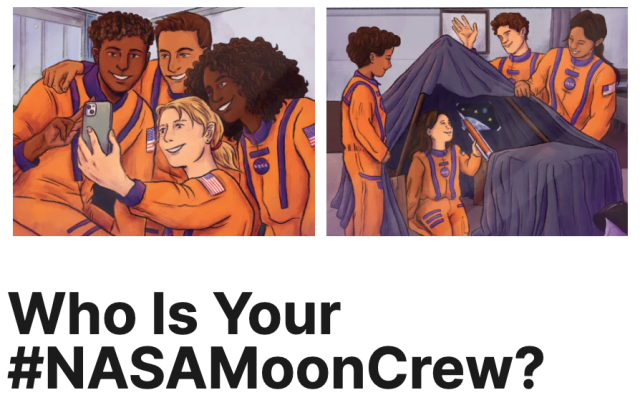
-
Choosing a crew for missions to the Moon requires the right mix of skills and attributes. All four astronauts not only bring different strengths and expertise to the mission, but they also must work well together in high-pressure situations. Discuss who you would choose to go with you on a trip around the Moon. Who is driving? Who is bringing the snacks? Who is making the Moon-trip playlist?
Observe the Moon Like an Astronaut
- Visitors step into the role of Artemis II astronauts, using real NASA imagery to study the Moon’s surface, identify features, and simulate astronaut observations. This activity can easily be adapted to making observation of your site.
International Observe the Moon Night
- Each year, observers around the world come together to celebrate Earth's Moon through direct observations, hands-on activities, lunar-themed music, artwork, readings, and more.
-
NASA's interactive map for observing the Moon each day of the year with tips on naked eye, binocular, and telescope observing.
Color-a-Pixel Activity - and Pre-generated Activities
- Start with an image of your choosing, and run it through the web-based activity generator tool. The tool will aggregate the original image pixels and remap the colors to the closest-fit colors in the standard 120-color Crayola crayon palette.
Apollo Missions Resources
- The national effort that enabled Astronaut Neil Armstrong to speak those words as he stepped onto the lunar surface fulfilled a dream as old as humanity.
The Apollo Lunar Surface Journal and Apollo Flight Journal
- The Apollo Lunar Surface Journal and Apollo Flight Journal are impressive resources for exploring the Apollo missions. Throughout these journals, the air-to-ground transcripts for NASA’s Apollo missions are supplemented with commentaries, photos, videos, audio clips, diagrams, maps, and other documents, to delve deep into the details.
Then and Now: Apollo to Artemis
- More than 50 years ago, NASA sent the first humans to the Moon under the Apollo program. Now, NASA is preparing to send the first woman and first person of color to the lunar surface as part of the Artemis program. Follow along as we show you then-and-now images of the Apollo and Artemis hardware here at the Kennedy Space Center as we prepare for our next giant leap in exploration.
Other Resources
Invite a Solar System Ambassador to present at your site! The NASA Solar System Ambassadors program is a public engagement effort that works with motivated volunteers across the nation to communicate the science and excitement of NASA's space exploration missions and discoveries with the people in their communities.
Listen to the National Association of Interpretation's What's Up Interpreters? podcast episode "To the Moon & Back" with Brandi Stewart, ETS Space Science Coordinator.
Essential Questions & Intangibles
Below are some ideas on essential questions and intangibles that can help you make connections between space exploration and your site's interpretive themes.
Essential Questions:
-
What responsibility to we have to protect a place from negative human impacts? Who gets to define that threshold?
-
How does viewing Earth from space / [local site feature] cultivate a sense of global stewardship?
-
How can a shared goal overcome division and disagreements among people?
-
How does changing who gets to be the "hero" alter the history we remember and the future we are building?
In what ways do the stories of historically excluded figures at your site pave the way for the trailblazers of the Artemis generation? -
When a group is forged to achieve a goal, how much of their success relies on the shared mission, and how much relies on their individual personalities and strengths?
Intangibles
| Trust | Interdependence | Ingenuity |
| Ego | Belonging | Isolation |
| Legacy | Risk | Vulnerability |
| Integrity | Courage | Invisible Labor |
| Mortality | Resilience | Admiration |
Need help brainstorming how to connect the Artemis Program to your site in a meaningful and relevant way? Please reach out to This email address is being protected from spambots. You need JavaScript enabled to view it., ETS Space Science Coordinator.